
Introduction
A proper gym workout can completely change the way your body feels, performs, and recovers. Whether your goal is muscle gain, fat loss, better posture, or improved confidence, the right training structure matters more than simply spending hours in the gym.
I have personally trained many people in the gym over the last two years, and I have also won at the state level through consistent gym training and disciplined workout habits. One thing I noticed early is that most beginners fail because they walk into the gym without a clear plan. They move from one machine to another without understanding which muscle group they are training or why they are doing a specific exercise.
This guide explains effective gym exercises, workout structure, training principles, common mistakes, and practical strategies that actually work for young adults, students, and working professionals who want long term fitness results.
Table of Contents
- Why a Structured Gym Workout Matters
- Understanding Workout Goals
- Warm Up Before Every Workout
- Effective Gym Exercises for Every Muscle Group
- Best Weekly Gym Workout Plan
- Strength Training vs Fat Loss Training
- Importance of Correct Form
- Common Gym Mistakes Beginners Make
- Nutrition and Recovery Basics
- Consistency and Discipline in Bodybuilding
- FAQ Section
- Conclusion
- CTA

Why a Structured Gym Workout Matters
One of the biggest mistakes people make is training without a plan. A structured gym workout helps you:
- Save time
- Train muscles properly
- Improve recovery
- Reduce injury risk
- Track progress more effectively
Before entering the gym, decide which muscle group you will train. For example:
- Monday for chest and triceps
- Tuesday for back and biceps
- Wednesday for legs
- Thursday for shoulders
- Friday for mixed strength work
Having a clear structure improves focus and workout quality.
Another practical tip is to always keep a Plan B ready. If a machine is occupied, immediately switch to another exercise targeting the same muscle group instead of wasting time waiting.
For example:
- If the bench press station is busy, perform dumbbell press
- If the cable row machine is occupied, use barbell rows
This simple habit keeps workout intensity high and avoids distractions.
Understanding Workout Goals
Different fitness goals require different workout styles.
Strength and Muscle Gain
For hypertrophy and strength:
- Perform 3 to 4 sets
- Aim for 8 to 12 reps
- Use challenging weights
- Rest for 60 to 90 seconds between sets
8≤Reps≤128 \leq \text{Reps} \leq 128≤Reps≤12
The last few repetitions should feel difficult while still maintaining proper form.
Fat Loss and Endurance
For endurance and calorie burn:
- Perform 3 to 4 sets
- Aim for 12 to 15 reps
- Use lighter weights
- Keep rest periods shorter
12≤Reps≤1512 \leq \text{Reps} \leq 1512≤Reps≤15
This style improves stamina and helps maintain workout intensity for longer sessions.
Warm Up Before Every Workout
Warm ups are often ignored, especially by beginners who rush toward heavy lifting. However, a proper warm up prepares the muscles, joints, and nervous system.
Effective Warm Up Routine
A simple 10 minute warm up can include:
- Light treadmill walking
- Jump rope
- Arm rotations
- Dynamic stretching
- Bodyweight squats
The tone during warm up should remain calm and controlled. Your breathing should feel steady, and your focus should stay on preparing the body.
A proper warm up improves blood circulation and reduces the chance of injury during heavy lifts.
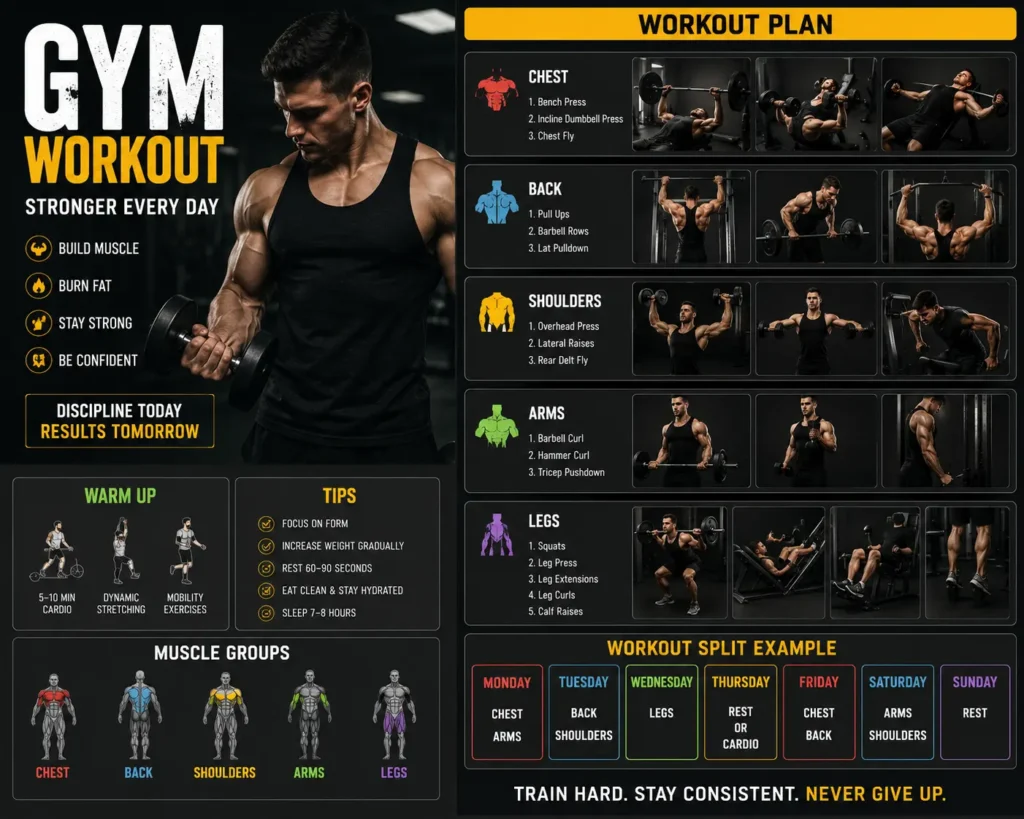
Effective Gym Exercises for Every Muscle Group
Chest Exercises
Bench Press
The bench press remains one of the best exercises for upper body strength and chest development.
Benefits:
- Builds chest mass
- Improves pushing strength
- Activates shoulders and triceps
Common mistake:
Lifting too heavy while sacrificing form.
Incline Dumbbell Press
This movement targets the upper chest and improves chest shape.
Best practice:
Lower the dumbbells slowly and maintain control throughout the movement.
Push Ups
Push ups are simple but extremely effective for endurance and chest activation.
Back Exercises
Lat Pulldown
Excellent for beginners learning back engagement.
Focus on pulling through the elbows instead of using momentum.
Barbell Row
This exercise develops thickness in the back and improves posture.
Working professionals who sit for long hours often benefit from rowing exercises because they strengthen the upper back muscles.
Deadlift
The deadlift trains multiple muscle groups together.
It improves:
- Strength
- Core stability
- Grip power
- Athletic performance
During heavy lifting sessions, your tone naturally becomes more aggressive and motivational. Short commands like “Push it!” or “One more rep!” help increase focus and adrenaline.
Leg Exercises
Many gym members avoid leg day, but strong legs improve overall performance and body balance.
Squats
Squats are considered one of the most effective gym exercises for total lower body development.
Benefits include:
- Stronger legs
- Better mobility
- Improved athletic strength
The graph above represents how progress in squats often grows steadily with consistent training habits.
Leg Press
This exercise allows controlled heavy lifting while reducing pressure on the lower back.
Romanian Deadlift
Excellent for hamstring and glute development.
A common mistake is bending the spine during the movement. Always keep the back neutral.
Shoulder Exercises
Overhead Press
A strong compound exercise for shoulder development and upper body strength.
Lateral Raises
Helps create wider shoulders and improves physique balance.
Use controlled movement rather than swinging the weights.
Arm Exercises
Barbell Curl
Targets the biceps effectively and helps increase arm size.
Tricep Pushdown
One of the safest and most effective tricep isolation exercises.
Best Weekly Gym Workout Plan
Monday
Chest and Triceps
Tuesday
Back and Biceps
Wednesday
Legs
Thursday
Shoulders and Abs
Friday
Full Body Strength Training
Saturday
Cardio and Mobility
Sunday
Rest and Recovery
This structure allows muscles enough recovery time while maintaining training frequency.
Strength Training vs Fat Loss Training
Many beginners think fat loss and muscle gain require completely different workouts. In reality, the foundation exercises remain similar.
The difference mainly comes from:
- Repetition range
- Rest periods
- Training intensity
- Nutrition habits
For fat loss:
- Higher repetitions
- Shorter rest
- More calorie control
For muscle gain:
- Heavier weights
- Progressive overload
- Higher protein intake
Importance of Correct Form
Correct exercise form matters more than heavy weights.
Poor posture during exercises can lead to:
- Shoulder injuries
- Knee pain
- Lower back strain
A practical example I often saw while training others was beginners copying advanced lifters without understanding movement mechanics.
For example:
- Swinging during curls
- Half squats
- Rounded back deadlifts
These habits reduce muscle activation and increase injury risk.
If your form breaks down, reduce the weight immediately.
Common Gym Mistakes Beginners Make
Training Without a Plan
Walking around the gym aimlessly wastes time and energy.
Ignoring Recovery
Muscles grow during recovery, not during workouts.
Sleep and nutrition are essential.
Lifting Too Heavy Too Early
Ego lifting is one of the fastest ways to get injured.
Skipping Leg Day
Balanced training improves overall strength and aesthetics.
Inconsistent Attendance
Consistency always beats short bursts of motivation.
Nutrition and Recovery Basics
Even the best gym workout routine fails without proper nutrition.
Protein Intake
Protein supports muscle recovery and growth.
Good sources include:
- Eggs
- Chicken
- Fish
- Paneer
- Greek yogurt
- Lentils
Hydration
Dehydration reduces strength and endurance.
Drink water consistently throughout the day.
Sleep
Aim for 7 to 8 hours of sleep daily for proper recovery and hormone balance.
7≤Sleep Hours≤87 \leq \text{Sleep Hours} \leq 87≤Sleep Hours≤8
Consistency and Discipline in Bodybuilding
Results never happen overnight.
One of the biggest lessons bodybuilding teaches is patience. When I prepared for state level competition, progress came from repeating the basics consistently every week.
Not every workout feels perfect. Some days energy levels are low, machines are occupied, or motivation drops. That is why discipline matters more than temporary motivation.
Follow a structured workout routine consistently and trust the process.
FAQ Section
What is the best gym workout for beginners?
A beginner should focus on compound exercises like squats, bench press, rows, and shoulder press while learning proper form and consistency.
How many days a week should I do a gym workout?
Most people see good results with 4 to 6 workout days per week depending on recovery and fitness goals.
Which gym exercises are best for muscle gain?
Bench press, squats, deadlifts, overhead press, and pull exercises are highly effective for muscle growth.
Is cardio necessary during muscle building?
Yes. Moderate cardio improves heart health, endurance, and recovery without affecting muscle gain when balanced properly.
How long should a gym workout last?
A productive gym session usually lasts between 45 and 90 minutes depending on workout intensity.
Conclusion
A successful gym workout is not about randomly lifting weights or copying others in the gym. Real progress comes from structure, consistency, proper form, recovery, and patience.
Effective gym exercises combined with disciplined training can improve strength, posture, confidence, and overall fitness. Whether you are a student starting your fitness journey or a working professional trying to stay healthy, building sustainable habits matters more than chasing quick results.
Focus on steady improvement, train intelligently, and stay consistent every week.
CTA
If you are starting your gym workout journey, begin with a simple structured plan and focus on mastering the basics first. Small improvements every week can create major physical and mental transformation over time.