
Introduction
Walking into a fitness gym for the first time can feel exciting and a little overwhelming. With so many machines, workout plans, and fitness advice available, many people struggle to decide where to begin. One of the most effective approaches for both students and adults is a full body workout.
A well designed full body workout helps improve strength, endurance, flexibility, and overall health without requiring hours in the gym every day. Instead of focusing on a single muscle group during each session, full body training works multiple muscle groups together, making it efficient and practical for busy schedules.
Whether your goal is weight management, muscle development, improved athletic performance, or simply maintaining a healthy lifestyle, understanding how to train properly can help you achieve better results.
Table of Contents
- What Is a Fitness Gym Full Body Workout
- Benefits of Full Body Training
- Essential Exercises for a Full Body Workout
- Sample Workout Plan for Students and Adults
- Common Mistakes to Avoid
- Best Practices for Better Results
- Real Life Example
- Frequently Asked Questions
- Conclusion
- Call to Action

What Is a Fitness Gym Full Body Workout
A full body workout is a training session that targets all major muscle groups in one workout. This includes:
Upper Body
Chest
Back
Shoulders
Arms
Lower Body
Quadriceps
Hamstrings
Glutes
Calves
Core
Abdominal muscles
Lower back muscles
Unlike split training routines that focus on specific muscle groups each day, a full body workout allows you to train your entire body in a single session.
This approach is especially beneficial for beginners because it helps develop balanced strength while improving movement patterns and overall fitness.
Benefits of Full Body Training
Efficient Use of Time
Students and working adults often have limited time for exercise. A full body workout allows you to train effectively three to four times per week while still achieving excellent results.
Better Calorie Burn
Because multiple muscle groups are active during the workout, your body uses more energy. This can support weight management and improve overall conditioning.
Improved Strength Development
Training major muscle groups together helps create a stronger foundation. Compound exercises encourage the body to work as a coordinated system rather than isolated parts.
Increased Consistency
Many people quit fitness programs because they are too complicated. Full body routines are simple to follow, making it easier to stay consistent over time.
Enhanced Athletic Performance
Sports, daily activities, and physical tasks require coordinated movement. Full body training develops functional strength that carries over into real life situations.
Essential Exercises for a Full Body Workout
A successful fitness gym routine should include compound movements that engage multiple muscles simultaneously.
Squats
Squats strengthen the legs, glutes, and core.
Practical Tip:
Focus on maintaining proper posture and controlled movement rather than lifting heavy weights immediately.
Deadlifts
Deadlifts build strength throughout the posterior chain, including the back, glutes, and hamstrings.
Practical Tip:
Keep the spine neutral and avoid rounding the back.
Bench Press
The bench press develops chest, shoulder, and arm strength.
Practical Tip:
Start with manageable weights and prioritize technique.
Lat Pulldown
This exercise targets the upper back and improves pulling strength.
Practical Tip:
Pull the bar toward the upper chest while keeping movement controlled.
Shoulder Press
Shoulder presses strengthen the shoulders and upper body.
Practical Tip:
Avoid excessive arching of the lower back during the lift.
Planks
Planks help improve core stability and posture.
Practical Tip:
Maintain a straight line from head to heels throughout the exercise.
Sample Workout Plan for Students and Adults
Here is a simple beginner friendly full body workout routine.
Warm Up
5 to 10 minutes of light cardio
Dynamic stretching
Workout
Squats: 3 sets of 10 repetitions
Bench Press: 3 sets of 10 repetitions
Lat Pulldown: 3 sets of 10 repetitions
Shoulder Press: 3 sets of 12 repetitions
Walking Lunges: 3 sets of 12 repetitions
Plank: 3 rounds of 30 to 60 seconds
Cool Down
Light stretching
Deep breathing exercises
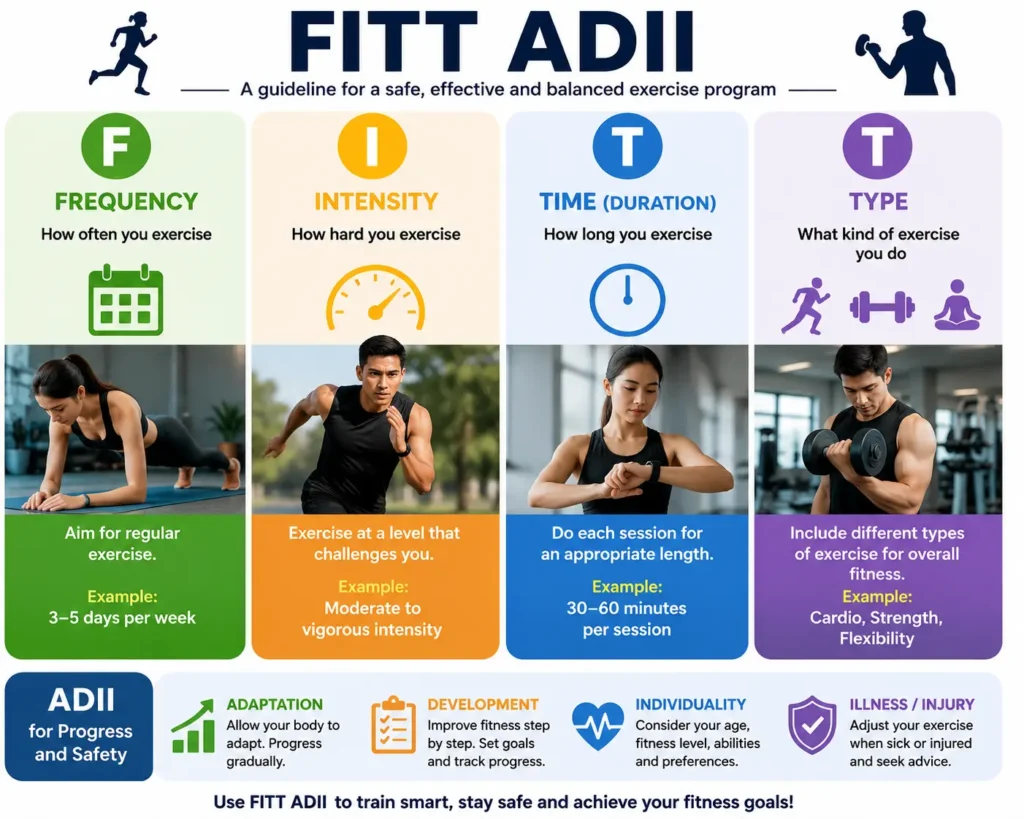
This workout can be performed three times per week with at least one day of recovery between sessions.
Common Mistakes to Avoid
Skipping Warm Up Sessions
Many beginners jump directly into heavy exercises. This increases injury risk and reduces performance.
Using Excessive Weight
Lifting too much weight too soon often leads to poor form and potential injuries.
Ignoring Recovery
Muscles grow and repair during recovery periods. Adequate sleep and rest are essential.
Neglecting Nutrition
Even the best workout routine cannot compensate for poor eating habits.
Inconsistent Training
Results come from regular effort over time. Consistency is more important than perfection.
Best Practices for Better Results
Focus on Progressive Improvement
Gradually increase weight, repetitions, or workout intensity as your fitness improves.
Prioritize Proper Form
Correct technique reduces injury risk and maximizes muscle engagement.
Stay Hydrated
Water supports performance, recovery, and overall health.
Track Your Progress
Keeping a workout journal can help you identify improvements and stay motivated.
Maintain Balanced Nutrition
Include quality protein, complex carbohydrates, healthy fats, fruits, and vegetables in your daily meals.

Real Life Example
Consider two university students starting a fitness gym program.
The first student trains six days per week with a complicated routine and quickly becomes overwhelmed.
The second student follows a structured full body workout three times per week. They focus on consistency, proper nutrition, and gradual progression.
After several months, the second student often experiences better adherence, improved strength, and sustainable results because the routine fits naturally into daily life.
This example highlights an important fitness principle. The best workout plan is the one you can follow consistently.
Frequently Asked Questions
1. Is a full body workout good for beginners?
Yes. Full body workouts are excellent for beginners because they train all major muscle groups while teaching proper movement patterns.
2. How many times per week should I do a full body workout?
Most beginners and intermediate exercisers benefit from three to four sessions per week.
3. Can a full body workout help with weight loss?
Yes. Full body training burns calories, builds muscle, and supports a healthy metabolism when combined with proper nutrition.
4. How long should a gym workout last?
A productive workout usually lasts between 45 and 75 minutes depending on goals and experience level.
5. Should students and adults use the same workout plan?
The basic structure can be similar, but training volume and intensity should match individual fitness levels and goals.
Conclusion
A fitness gym routine centered around a full body workout is one of the most practical and effective approaches for students and adults. It helps build strength, improve fitness, increase energy levels, and support long term health without requiring excessive time in the gym.
By focusing on compound exercises, proper technique, balanced nutrition, and consistent effort, you can create a sustainable fitness habit that delivers meaningful results. The key is not finding the perfect workout but committing to a routine that fits your lifestyle and supports your goals.
Call to Action
Ready to begin your fitness journey? Start with a simple full body workout routine, focus on proper form, and track your progress each week. Small improvements made consistently can lead to impressive long term results.